The olive harvest
From November to January, nets are spread under the trees and the mills run. How olives are harvested, when, and what the oil designations mean.
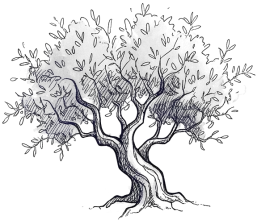
The Provençal winter has its own rhythm: from November to January, the olives are picked. Nets are spread under the trees, families and neighbours lend a hand, and the mills run at full speed.
Green, turning, black
The same olive changes colour as it ripens: green, then purplish (“turning”), then black. When it is picked depends on what you want to do with it:
- green table olives are picked from September and October;
- oil is mostly made from November to January, from riper and riper olives: the greener they are, the more peppery and grassy the oil; the riper they are, the softer it is;
- black table olives, such as those from Nyons, are harvested fully ripe, in winter.
At the mill
It generally takes five to seven kilos of olives for a litre of oil, depending on the variety and ripeness. At the mill the olives are washed and crushed, stones and all, into a paste, which is then kneaded and separated: oil on one side, vegetable water and pomace on the other. “Extra virgin” oil is obtained only by these mechanical, cold processes.
The designations
Several Provençal oils carry a protected designation of origin, which defines the production area, the varieties and the methods: olive oil from Provence, Haute-Provence, Nyons or the Vallée des Baux-de-Provence, among others.
And in Sault?
Olive trees fear hard frosts. On high plateaus such as Sault they become rare; you find them lower down, in the valleys of the Comtat, the Baronnies or the Luberon. On the day you arrive, the road up from Carpentras takes you from olive groves to lavender fields in a few dozen kilometres.
Sources
- Huiles d'olive de Provence, de Haute-Provence, de Nyons et de la vallée des Baux (AOP) — INAO
- L'olivier et l'huile d'olive — France Olive (French interprofessional olive association)