The Provençal language, from Mistral to today
Provençal, one form of the langue d'oc, the poets of the Félibrige and Frédéric Mistral's Nobel Prize.
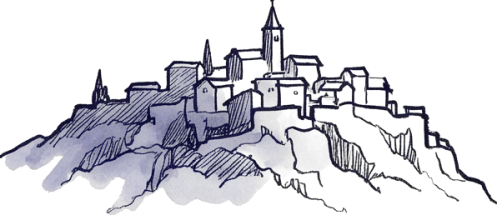
You can still hear Provençal in place names, in a few expressions and on the bilingual signs at the entrance to many villages. It is one form of the langue d’oc, or Occitan, historically spoken across the whole south of France.
The seven poets of Font-Ségugne
On 21 May 1854, seven young poets met at the château de Font-Ségugne, near Avignon. Among them were Frédéric Mistral, Joseph Roumanille and Théodore Aubanel. They founded the Félibrige, an association to defend the Provençal language and keep it alive. It still exists.
Five years later Mistral published Mirèio (Mireille), a long poem in Provençal about the ill-fated love between the daughter of wealthy farmers and a poor basket-maker. It opens: “Cante uno chato de Prouvènço”, “I sing of a young girl of Provence”.
A Nobel Prize in Provençal
Mistral then spent twenty years on a huge dictionary, Lou Tresor dóu Felibrige, published between 1878 and 1886. In 1904 he received the Nobel Prize in Literature, shared with the Spanish playwright José Echegaray. It is one of the few Nobel Prizes awarded for work written in a regional language.
A few words to recognise
- mas: the Provençal farmhouse;
- restanque: a farming terrace held up by a dry-stone wall;
- mistral: the north wind, whose name means roughly “masterly”;
- santon: from santoun, “little saint”;
- calanque: a narrow inlet between cliffs.
And today?
Provençal is still taught in some schools, in associations and at university. Bilingual street names, Christmas carols and the December pastorales are where you are most likely to hear it.
Sources
- The Nobel Prize in Literature 1904 — Nobel Prize Outreach
- Le Félibrige — Félibrige
- Frédéric Mistral, Mirèio (1859) — Wikisource